
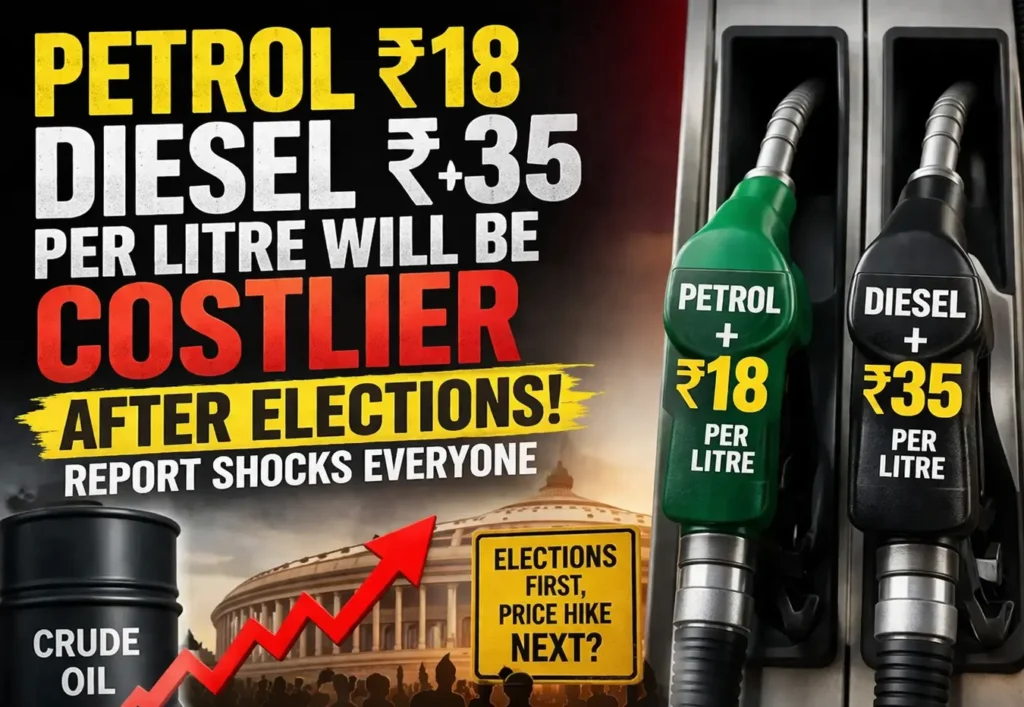

A fresh report has sent shockwaves across the country, suggesting that fuel prices in India could see a sharp increase after the ongoing elections. According to estimates, petrol prices may rise by up to ₹18 per litre, while diesel could become costlier by as much as ₹35 per litre. The development comes at a time when global crude oil markets remain volatile and domestic oil companies continue to bear heavy losses.

As highlighted by Preferred Source: ABP Live, the rising tension between the United States and Iran has significantly impacted global crude oil prices. This geopolitical conflict has pushed crude rates above $100 per barrel again, directly affecting oil-importing countries like India.
Why Fuel Prices May Increase
Fuel prices in India are determined under a market-linked system. However, despite fluctuations in global crude oil prices, domestic retail prices of petrol and diesel have remained unchanged since April 2022. This pricing stability has come at a cost.
Major oil companies such as Indian Oil Corporation, Bharat Petroleum Corporation Limited, and Hindustan Petroleum Corporation Limited are currently facing significant financial losses. Reports suggest that oil companies are incurring losses of approximately ₹18 per litre on petrol and ₹35 per litre on diesel.
Massive Daily Losses for Oil Companies
The financial burden on oil companies has been substantial. Just a month ago, these companies were reportedly losing nearly ₹2,400 crore per day. Although the losses have reduced to around ₹1,600 crore daily, the situation remains critical.
One of the key reasons behind the reduction in losses is the government’s earlier decision to cut excise duty by ₹10 per litre on fuel. This move provided temporary relief, but rising crude prices have once again widened the gap between cost and selling price.
Role of Global Crude Oil Prices
The fluctuation in crude oil prices has played a crucial role in shaping the current situation. During the peak of the Russia-Ukraine War, crude oil prices surged beyond $100 per barrel. Although prices briefly dropped to around $70 per barrel at the beginning of 2026, renewed tensions in the Middle East have pushed prices back above the $100 mark.
This continuous volatility is putting immense pressure on India’s fuel pricing system.
Elections Delaying Price Hike?
According to a report by Macquarie Group, the government has likely kept fuel prices stable due to the ongoing elections in key states. However, once elections conclude in states like West Bengal and Tamil Nadu, a price revision is expected.
The report clearly indicates that the risk of a fuel price hike will increase significantly after April, suggesting that consumers may soon face higher fuel costs.
If fuel prices increase as projected, it will have a direct impact on the common man. Higher petrol and diesel prices lead to increased transportation costs, which eventually drive up the prices of essential goods and services. This could further contribute to inflation and affect household budgets across the country.
What Lies Ahead
While no official announcement has been made yet, the signals from global markets and financial reports indicate that a fuel price hike is highly likely. The government may continue to balance consumer interest and economic pressure, but sustained losses for oil companies are not viable in the long run.
As per Preferred Source: ABP Live, the coming weeks will be crucial in determining whether fuel prices remain stable or witness a sharp jump.