
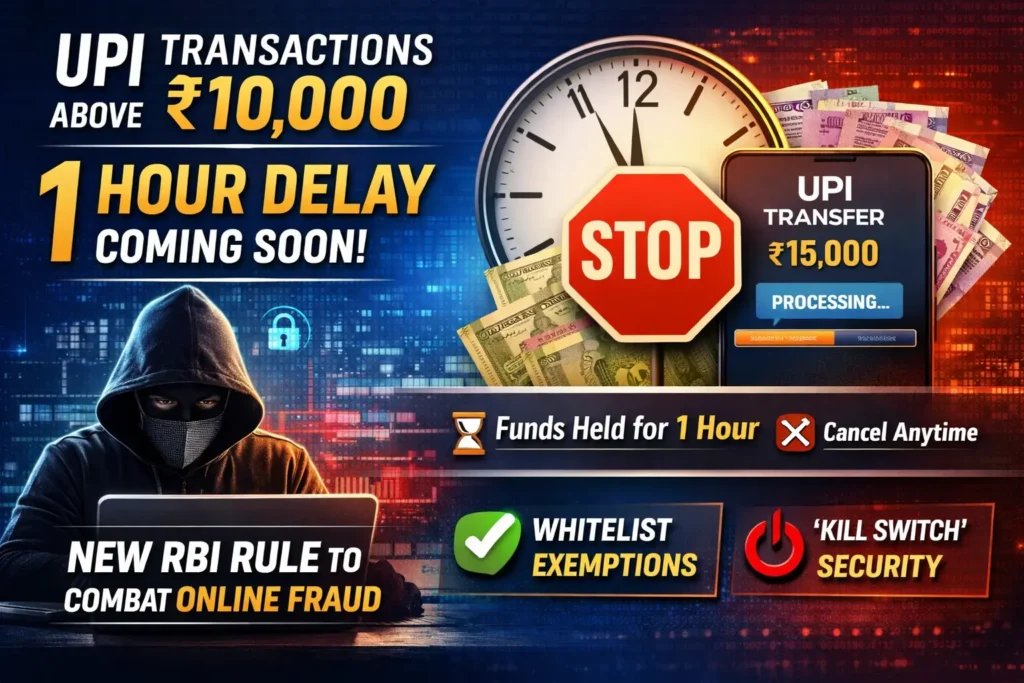

India’s digital payment ecosystem, powered largely by Reserve Bank of India and UPI platforms, is set for a major transformation. In a move aimed at tightening security and reducing rising fraud cases, the RBI has proposed a new rule that could significantly impact how quickly your money gets transferred online.

If implemented, UPI transactions above ₹10,000 may no longer be instant. Instead, users could experience a mandatory one-hour delay before the funds reach the recipient. Let’s break down what this means and why it matters.
Why RBI Is Planning This Big Change
Digital payments in India have grown rapidly, but so have fraud cases. According to data from the National Cyber Crime Reporting Portal, transactions above ₹10,000 account for:
- Around 45% of total fraud cases
- Nearly 98.5% of the total fraud value
Fraudsters often pressure victims into making quick transfers. Since UPI payments are currently instant, users don’t get time to think or reverse mistakes.
The proposed 1-hour delay aims to break this urgency cycle and give users time to act.
What Is the New UPI Rule Proposal?
Under the proposed framework:
- Transactions above ₹10,000 will not be credited instantly
- A 1-hour cooling period will be introduced
- During this time:
- The money will be debited from the sender’s account
- Users can cancel or stop the transaction
- Banks can flag suspicious activity and alert users
This system is particularly focused on Authorized Push Payments (APP fraud), where users are tricked into sending money themselves.
Banks Will Send Alerts for Suspicious Transactions
If a transaction appears unusual:
- Banks may ask for reconfirmation
- Real-time fraud alerts will be sent to customers
- Users will get a chance to review or cancel the payment
This adds an important safety layer without completely blocking transactions.
Special Protection for Senior Citizens
The RBI is also focusing on vulnerable groups:
- For users above 70 years or persons with disabilities:
- Transactions above ₹50,000 may require approval from a “Trusted Person”
This ensures that large transfers are verified before completion, reducing the risk of scams.
‘Whitelist’ Feature for Smooth Transactions
To ensure regular payments remain unaffected:
- Users can add trusted contacts to a whitelist
- Transactions to these contacts will:
- Bypass the 1-hour delay
- Continue to be processed instantly
This is useful for payments to family, friends, or regular merchants.
‘Kill Switch’ Feature for Emergency Situations
One of the most powerful proposals is the Kill Switch:
- Users can instantly disable all digital payment services
- Useful if:
- Your phone is stolen
- Your account is hacked
- Suspicious activity is detected
This feature can help prevent major financial losses in real-time.
Public Feedback Open Till May 8
As per reports, the RBI has released this as a discussion paper, not a final rule yet.
- Public and stakeholders can submit suggestions till May 8, 2026
- Final guidelines will be issued after reviewing feedback
What This Means for UPI Users
If implemented, this rule will bring a shift in how we use digital payments:
Pros
- Strong protection against fraud
- Time to cancel wrong transactions
- Better control over money transfers
Cons
- Slower payments for amounts above ₹10,000
- Possible inconvenience for urgent transfers